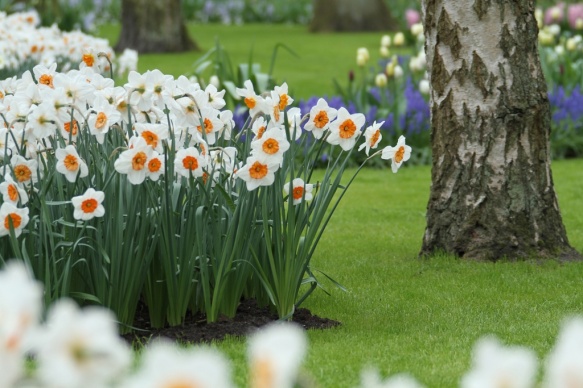
 I recently read an article that made me chuckle. It started off, "There are so many similarities between SEO and gardening..."
Of course, I had to read on.
In the article, Bernie Borges describes the stages of gardening and how they relate to Search Engine Optimization (SEO). It reminded me of my post last week about content marketing in which Marcus Sheridan said:
"Success in this business doesn’t happen overnight. Content marketing isn’t a chia-pet—water today, a vine jungle tomorrow."
Thanks for the nod to our industry, folks! The two can and should work together!
Here is how Bernie thinks SEO and gardening are similar:
Planning
The beauty (and work) of a garden is how well it was planned. Will you use natives, do you want a vegetable garden, is your garden in the shade or sun, which types of plants, trees and shrubs do you want and where will they go?
SEO, says Bernie, also needs a plan. Persona analysis, i.e. identifying the personas of the people who buy your products or services, is a must to consider the type of content needed on your website. Keyword research is another must to determine which keywords need to be included in the website content. These two elements are the minimum planning required for a successful SEO strategy.
Preparing the Soil
Once you have a plan for the garden, the key step in successful plants is healthy soil. Your soil is the food for your plants so it must have key nutrients, minerals and organic matter to feed the roots.
Likewise, Bernie says a website must have a “healthy architecture” that will allow for search engines like Google to properly crawl and index its content so that it will score the website’s content favorably and retrieve its content when people search using relevant keywords. Important SEO architecture issues include the URL naming structure, URL navigation structure, the proper use of meta data, and efficient coding that is easy for search engines to crawl. There are other technical issues that can impact SEO, but these are the big ones.
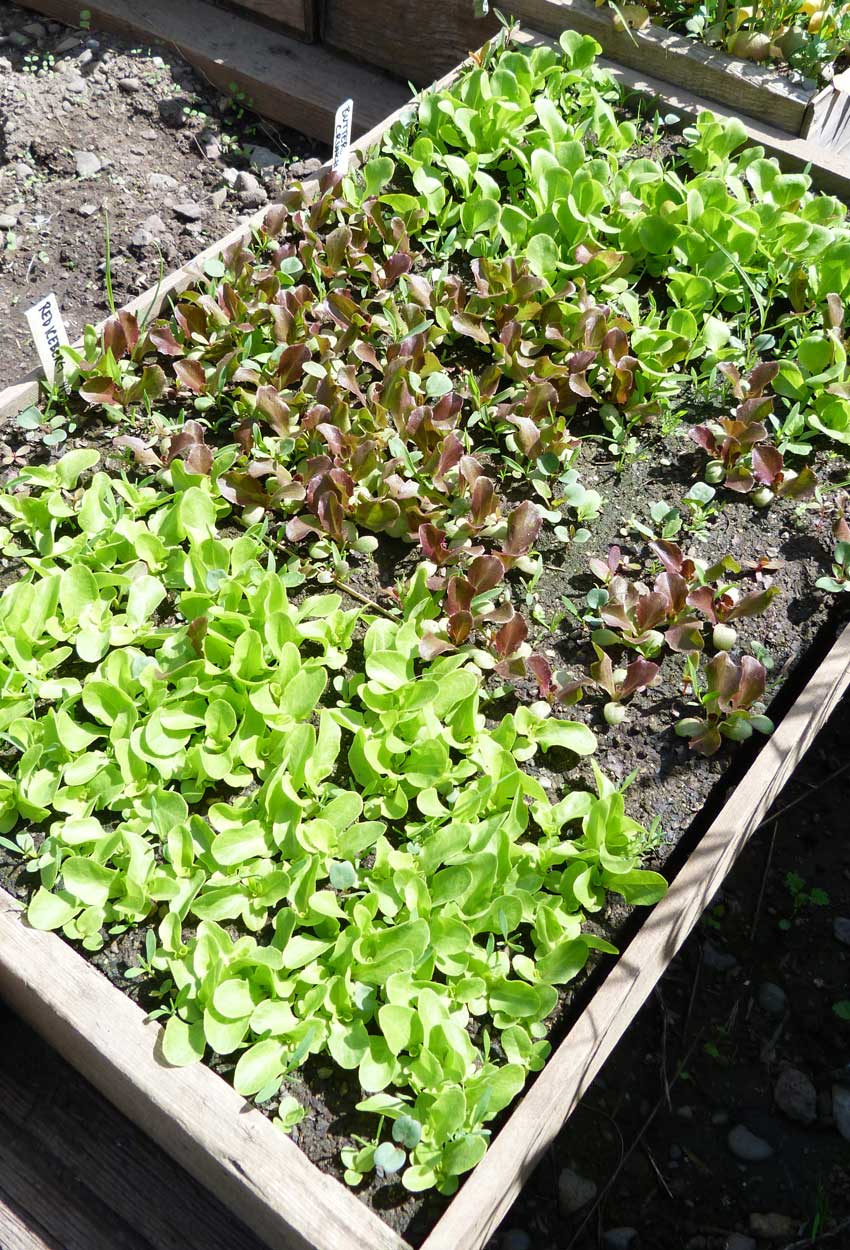
Planting
Once you have planned the garden, prepared the soil and purchased the plants, it’s now time to plant! This can be hard work and you can expect to get your fingernails dirty, but the reward is right around the corner.
The SEO equivalent is the act of optimizing content, page by page. Bernie says that each page MUST be uniquely focused on one topic just like a plant is unique. Each page of content gets optimized with a singular keyword focus. Think of it this way. You want to make it easy for the search engine when it crawls your website to interpret the specific theme of each page so that it may get displayed in a search for a person interested in that topic.
Fertilizing
Gardeners understand the importance of (always organic) fertilizer to provide nutrients to plants and maintain healthy roots. Those nutrients serve to stimulate growth, botanic beauty and protect against disease.
In SEO the fertilizer equivalence that gives a website content marketing strength is authority. And, Bernie says, authority is gained through a combination of longevity, and an abundance of relevant content, which other people link to and share through social media. Search engines determine the authority of a website by analyzing the quantity and quality of content and how much others link to it and share it. While low quality content is not effective, research proves that 50 pages is better than 20, 500 pages is better than 50 and 2000 pages is better than 500. This point illustrates that the more relevant content is present in a website, the more authority it is given by search engines which will result in more search discoverability and result in more inbound traffic to a website.
Pruning
Pruning is a task that many people don't know how to do properly. (Just ask the Grumpy Gardner with his Crepe Murder escapades.) But proper acts of pruning get rid of dead remnants in a garden to make room for new plant life.
In the SEO context, editing content to reflect updates in your business or industry is the equivalent of pruning. Search engines have the capability to assess the last date of content revision as well as the frequency. Algorithmically search engines assume that if you don’t periodically update your content or add to your website’s content you aren’t giving your website visitors a good experience. The result is your website will be scored lower and result in poorer SEO results. In other words adding and updating website content is a must for long term SEO success.
Ongoing Care
The best part of gardening is watching your plants grow and blossom. The hard work is over, but you're never really done. In order for a garden to thrive in the long run, a garden needs love, care and constant attention. Yes, constant attention.
Likewise, SEO requires constant attention. A quarterly crawl report should be performed to assess any technical issues. Periodic keyword research is advisable to learn of new ways your customer searches for your products. Observing the type of content your competitors launch is advisable. And, most important is a commitment to continually adding new content to your website throughout the year. No matter the industry, adding content is a must for effective SEO. New content can be in many formats, such as vertical industry solutions, white papers on unique topics, case studies, educational resources, e-books, blog posts, videos, podcasts, etc.
The parallels between gardening and SEO are fun to review, and probably puts SEO in a whole new light for gardeners, and vice-versa. In fact, Bernie said, "the next time we hire an SEO implementation consultant I’m going to look for someone who is an experienced gardener." Call us, Bernie!
Interested in learning how to master social media and drive more traffic to your website? Download this e-book.

*Images courtesy of Longfield Gardens and Sustainable Seed.
Katie

 In the business of marketing, there are countless theories as to how
best to promote and brand a business, product, or services. Some say
In the business of marketing, there are countless theories as to how
best to promote and brand a business, product, or services. Some say