
Every summer, I remember my grandmother singing a folk song to my sister and me as she baked homemade cornbread and cooked grits, as we gathered around her homespun apron in her Carolina farmhouse.
 It goes something like.. "Picking up paw paws puttin in your pocket... way down yonder in the paw paw patch..." We sang with gusto but never actually tasted a paw paw!
Today, this indigenous fruit (and a favorite of Thomas Jefferson) is making a slow but steady comeback. It's rich in antioxidants and other nutrients and can be used in multiple recipes.
The pawpaw (Asiminia triloba) fruit has a tropical flavor that resembles a mix of banana, mango and pineapple (depending on your discriminating palette) with a creamy, custard-like texture similar to an avocado and a thickish skin.
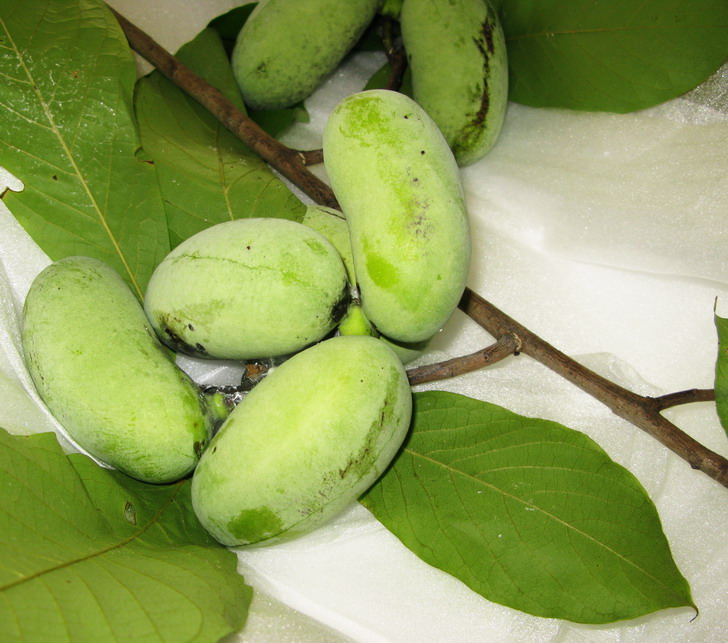 For those intrepid foragers, wild paw paws are smaller than the new cultivated varieties. You probably won't find them at grocery stores (yet) and may have to wait for these seasonal fruit to appear at select farmers markets, generally in September.
Thanks to Kentucky State University, pawpaw research is under way for developing orchard management, conducting regional trials, and improving propagation methods.
For those who prefer to forage in their own backyard, berries and small fruit trees are the ticket. From blueberries and raspberries to small citrus trees in containers, new cultivars are making it easier for all of us to enjoy fruit and berries (and pawpaws) too!
Just wish I knew all the words to that paw paw song...
Lynne
Garden Media Group
Photo credit: Dr. Kirk Pomper, Kentucky State University
Tigersandstrawberries.com
